User-generated content has become an important part of digital communication. People often respond differently to a video that feels natural and personal compared with a highly polished commercial. This has made UGC increasingly useful for brands that want to communicate with audiences through relatable experiences.
At the same time, creating this type of content at scale can be difficult. A business may need multiple concepts, different formats, several versions of a video, and frequent creative updates. Artificial intelligence is beginning to change how these tasks are approached.
Rather than replacing creators, AI can help reduce repetitive work and make the production process more efficient.
Why UGC Works So Well
Traditional advertisements often focus heavily on polished visuals and direct product promotion. UGC takes a different approach. It can look like something a customer or creator would naturally share on social media.
This format can be particularly useful when a product requires explanation or demonstration. A creator can show how a product works, describe an experience, or explain a feature conversationally.
The value comes from the combination of information and authenticity. Viewers can see the product in a familiar setting rather than only through a traditional advertising format.
However, producing enough variations can become challenging when a campaign needs to reach several audiences.
See also: Bluetooth, Apps, and Ears: How Tech Is Changing Personal Health
Where AI Enters the UGC Workflow
AI can support several stages of video production. It can help teams generate content ideas, organize scripts, create variations, analyze audience responses, and speed up repetitive editing tasks.
For example, a marketing team may have one basic product message but want several versions for different customer groups. AI-assisted workflows can help transform the original concept into different scripts or creative directions.
This does not mean every part of the process should be automated. Human creativity remains important for deciding whether a concept feels believable and whether the message fits the audience.
The most useful approach is often a combination of human creative direction and machine-assisted production.
AI Can Make Video Production More Scalable
One of the biggest challenges with UGC campaigns is producing enough content without sacrificing consistency.
A campaign might require short product demonstrations, testimonials, educational clips, and social media advertisements. Creating every version manually can take considerable time.
AI can help by reducing repetitive production tasks. Teams can use workflow automation services to streamline processes such as organizing creative assets, managing scripts, coordinating editing tasks, and preparing content for different platforms. This becomes especially useful when campaigns need frequent updates, as marketers can modify existing creative structures and produce new versions more efficiently.
This becomes especially useful when campaigns need frequent updates. Instead of rebuilding every asset from the beginning, marketers can modify the existing creative structure and produce new versions more efficiently.
The Role of AI UGC Video Tools
The growth of AI-generated and AI-assisted video has also introduced new possibilities for brands. A business can experiment with different presentation styles without arranging a complete production setup for every variation.
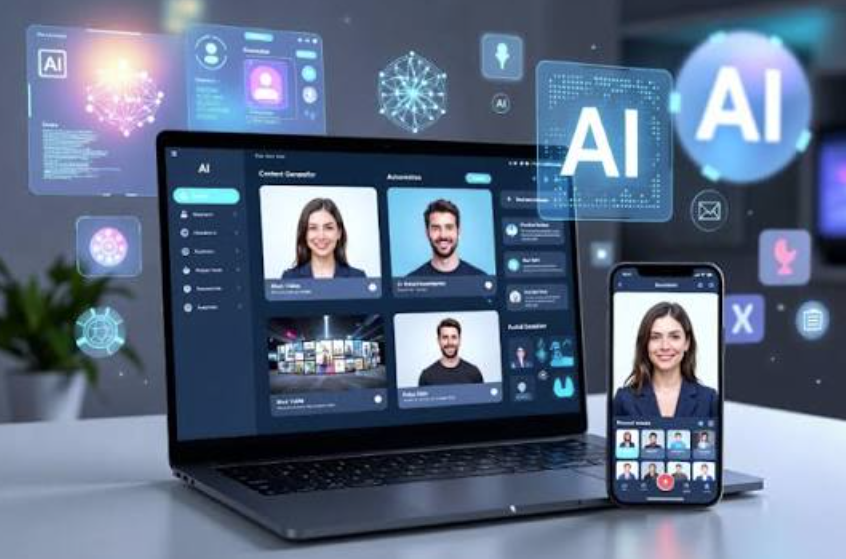
For example, an AI UGC video workflow can combine a prepared script, digital presentation elements, product visuals, and automated editing to create a video that follows a UGC-style format. Tools such as Predis.ai can support marketers in developing social-first creative content more efficiently, especially when multiple variations are needed for testing.
The important point is that automation should support the message rather than make the content feel artificial. A technically impressive video can still perform poorly if it does not feel relevant to the audience.
Data Can Improve UGC Decisions
AI becomes even more useful when it is combined with data.
Instead of choosing creative formats based only on assumptions, marketing teams can study performance signals such as watch time, engagement, click-through rates, and audience retention.
Suppose one UGC video receives significantly more engagement than another. The team can examine what made it different. Perhaps the opening was shorter, the explanation was clearer, or the creator demonstrated the product earlier.
These observations can then influence the next group of videos.
This creates a feedback loop:
Create → Publish → Measure → Learn → Improve
Over time, this process can make content production more informed.
Human Creativity Still Matters
Despite the growth of AI, authenticity remains one of the biggest advantages of UGC.
People can recognize when content feels overly scripted or disconnected from real experiences. A creator’s personality, delivery, expressions, and personal perspective can make a video more convincing.
AI can assist with production, but it cannot automatically understand every cultural reference, emotional detail, or audience expectation.
That is why creators and marketers still need to make the final creative decisions.
What UGC Could Look Like in the Future
The future of UGC is likely to involve a combination of creators, AI tools, automation, and analytics.
Creators may spend less time on repetitive production tasks and more time developing concepts and storytelling. Marketing teams may be able to test more creative variations without dramatically increasing production costs.
At the same time, brands will need to maintain clear standards around transparency, originality, privacy, and responsible AI use.
The goal should not be to create the maximum amount of content. It should be to create useful content that reaches the right audience and communicates a message effectively.
Final Thoughts
AI is changing UGC video creation by making content workflows faster, more flexible, and easier to scale. From scripting and editing to creative testing and performance analysis, AI can support many parts of the process.
However, successful UGC still depends on something technology cannot easily automate: understanding what people actually want to watch.
The strongest strategy is therefore not AI instead of creators, but AI working alongside human creativity. When technology handles repetitive tasks and creators focus on authenticity and storytelling, UGC can become both more efficient and more engaging.