A decade ago, hearing devices were something people whispered about or avoided altogether. Now they’re syncing with phones, streaming calls, and adjusting themselves based on the room you’re standing in. The shift isn’t just about better microphones or smaller chips. It’s about how technology is quietly rewriting what personal health support looks like, one connected device at a time.
Take affordable hearing devices as an example. For years, cost was the single biggest barrier keeping people from getting help. A basic pair could run into the thousands, and insurance rarely covered the full amount. Bluetooth and app-based tech changed that math. Manufacturing got cheaper, distribution moved online, and suddenly there were options that didn’t require a second mortgage. People who might have waited another five years to address their hearing are now doing something about it in their thirties and forties instead of their sixties.
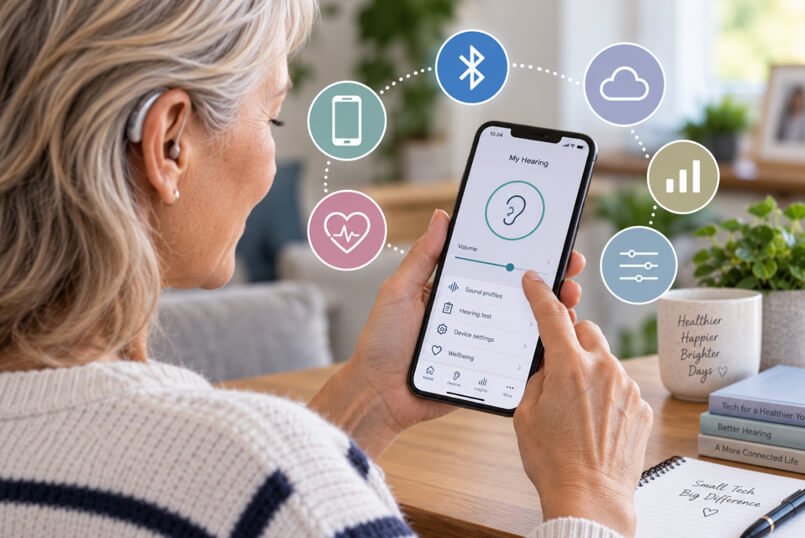
Apps play a bigger role in this than most people realize. It used to be that adjusting a hearing device meant a trip to an audiologist’s office, sitting in a booth, and waiting while someone fiddled with settings you couldn’t see or control. Now you can open an app on your phone and tweak volume, tone, and background noise reduction from a coffee shop. Some apps even let you save different settings for different environments, so your morning commute sounds different from a dinner with friends. That level of control used to be reserved for professionals. Today it’s sitting in your pocket.
Compatibility Is Catching Up With Convenience
None of this works if the devices themselves don’t talk to each other properly. This is where hearing aid compatibility becomes less of a technical footnote and more of a daily concern for anyone shopping around. Not every phone pairs cleanly with every device, and not every hearing aid supports the same Bluetooth protocols. Someone with an older Android phone might find their options more limited than a friend with the newest iPhone, which is frustrating when you’re just trying to hear your own kid on a video call.
The good news is that compatibility has improved a lot faster than most people expected. Manufacturers realized early on that a device only sells if it works with what people already own, and that pushed a lot of standardization across the industry. Bluetooth LE Audio, in particular, has made a real difference, giving devices a more consistent and lower power way to connect without draining battery life in a few hours.
Beyond Hearing: A Bigger Health Pattern
What’s happening with hearing devices mirrors a broader trend across personal health tech. Continuous glucose monitors talk to phones now. Smartwatches track heart rhythms and flag irregularities before a person even notices symptoms. The common thread is that health monitoring used to be something that happened occasionally, in a clinical setting, with a professional interpreting the results. Now it happens constantly, in the background, with the person themselves holding most of the information.
This changes the relationship people have with their own bodies. Instead of waiting for an annual checkup to find out something’s off, users get nudges in real time. A hearing app might flag that someone’s been in consistently loud environments and suggest a volume adjustment. A fitness tracker might notice a resting heart rate creeping up over a few weeks. None of this replaces a doctor, but it gives people more to work with when they do eventually sit down with one.
See also: Best Business Setup Company in Dubai: How to Choose the Right Business Partner
What This Means for Everyday Users
For anyone weighing whether to get a hearing device, the calculation looks pretty different than it did even five years ago. Price is more manageable, adjustments don’t require a specialist appointment for every tweak, and compatibility issues, while still real, are shrinking. That doesn’t mean the process is entirely simple. People still need to check that a specific device works with their phone, understand what features actually matter to them, and figure out which app ecosystem fits how they live.
There’s also a learning curve. Not everyone wants to manage their hearing through an app, and some people would rather things just work without fiddling with settings. Manufacturers are aware of this too, which is why a lot of newer devices default to automatic adjustments while still leaving manual control available for people who want it.
Looking Ahead
The direction of travel is pretty clear. Hearing tech, like most personal health tech, is moving toward smaller, smarter, more connected devices that put more information and control directly into the hands of the people wearing them. Bluetooth and apps were the starting point, not the finish line. As compatibility keeps improving and prices keep dropping, more people are likely to address hearing changes earlier rather than later, simply because doing so is no longer such a hassle.
It’s a small shift in one corner of health tech, but it says something bigger about where things are heading. The gap between “medical device” and “everyday gadget” keeps getting narrower, and that’s probably a good thing for anyone who’s ever struggled to hear across a noisy room.