You know your cat’s normal rhythm. The little cough that comes and goes, the way they crouch low during a flare, the relief when the inhaler finally helps. Then one day it looks different. Their sides pull harder with each breath, their mouth opens, they seem scared, and suddenly the routine that usually works at home does not feel like enough. That fear is real, and it usually hits fast. In that moment, getting help from a trusted animal hospital in Rancho Cucamonga CA can make all the difference.
When a cat has asthma, home treatment can control many episodes, but some attacks cross the line into an emergency. A severe feline asthma flare can block airflow enough that your cat needs oxygen, injectable medications, close monitoring, and support that only an animal hospital can provide. If your cat is breathing hard, breathing with an open mouth, turning pale or blue around the gums, or collapsing, this is not a wait and see moment.
Severe feline asthma changes quickly and can overwhelm home care
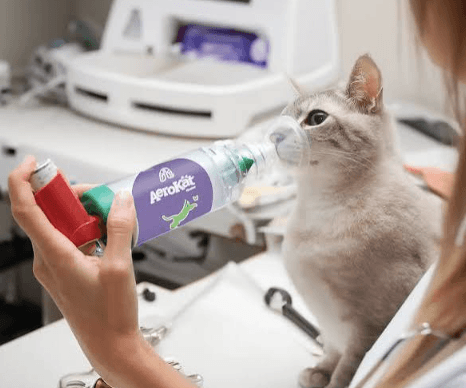
Asthma narrows the lower airways and fills them with inflammation and mucus. During a mild episode, an inhaler may calm things down. During a serious one, the airways can tighten so much that your cat cannot move enough air in or out, even if you do everything right. Washington State University explains how feline asthma affects the lungs and why treatment often includes inhaled medication, but they also make clear that acute attacks can become dangerous fast.
You may be wondering if you are overreacting. Most cat owners ask themselves that right before a true emergency. The harder part is that respiratory distress does not always look dramatic at first. Some cats do not cry or thrash. They get quiet. They stretch their neck out, breathe with their belly, or refuse to lie down. A cat that seems “tired” may actually be running out of reserve.
This is where home care reaches its limit. Rescue inhalers help many cats, but they depend on enough airflow to carry medicine into the lungs. A frightened cat may resist the spacer. Stress can worsen the attack. If there is pneumonia, heart disease, or another cause of breathing trouble mixed in, the inhaler alone will not fix the problem. Cornell’s guide to dyspnea in cats and difficulty breathing is blunt for good reason. Breathing distress needs prompt veterinary attention because the list of causes is serious and the signs can overlap.
Hospital treatment for cat breathing distress focuses on oxygen, stabilization, and finding the trigger
At the hospital, the first goal is simple. Help your cat breathe with the least stress possible. That often means oxygen right away, sometimes in an oxygen cage so handling stays minimal. Cats in respiratory distress can worsen with too much restraint, so the team usually moves carefully and keeps things quiet.
Once your cat is stable enough, treatment may include fast acting bronchodilators, corticosteroids to calm airway inflammation, sedation if panic is making breathing worse, and imaging or bloodwork when it is safe. Texas A&M discusses ways veterinarians help cats breathe easier with feline asthma, including long term management and reducing triggers like smoke, dust, aerosols, and some litters.
The emotional part is hard because you are making decisions while watching your cat struggle. The financial part can hit just as hard. Emergency exams, oxygen therapy, X rays, injectable drugs, and monitoring add up quickly. Even so, delaying care can lead to a longer stay, more testing, and a higher risk that your cat arrives in worse shape. With breathing problems, waiting rarely saves money.
See also: Rethinking Women’s Health Education
Home inhaler support and animal hospital care serve different purposes
| Situation | Home Inhaler Support | Animal Hospital Care |
|---|---|---|
| Mild coughing episode with normal recovery | Often appropriate if your veterinarian has given a treatment plan | Usually not needed unless episodes are increasing or changing |
| Breathing faster than usual, belly effort, restless posture | May not be enough, especially if your cat resists the spacer | Recommended because distress can escalate quickly |
| Open mouth breathing, blue or pale gums, collapse | Not enough and can waste critical time | Emergency stabilization with oxygen and injectable treatment |
| Need to confirm asthma versus another cause | Cannot diagnose pneumonia, fluid, or heart disease | Exam, imaging, and monitoring can separate look alike problems |
| Long term control between attacks | Useful for maintenance and rescue plans at home | Useful for rechecks, medication adjustment, and severe relapses |
When a cat with asthma needs emergency care, the difference is not convenience. It is the level of support available minute to minute. A spacer and inhaler are part of asthma management. An oxygen cage, injectable drugs, and trained monitoring are part of crisis care. They are not interchangeable.
Cat asthma hospital treatment starts with calm, then speed
1. Watch the breathing, not just the cough. Count breaths when your cat is resting if you can do it without disturbing them. Notice belly effort, open mouth breathing, neck extension, hiding, or inability to settle. These signs matter more than whether you hear a classic wheeze.
2. Keep transport low stress and skip home fixes that delay care. Do not force food, water, or repeated handling. Keep the carrier ready, lined with a towel, and the car quiet. If your veterinarian has told you to use a rescue inhaler during a flare, follow that plan while you prepare to leave, but do not keep retrying for an hour if your cat is getting worse.
3. Ask for a clear discharge plan after stabilization. Once your cat is safe, ask what changed, what warning signs now mean immediate return, how often to use each medication, and what home triggers to remove. This is where animal hospital care and home care connect, and clear instructions lower the chance of another crisis.
Fast care gives your cat the best chance to recover from a serious asthma flare
You are not being dramatic if your cat’s breathing looks wrong. You are responding to one of the few problems that can turn dangerous in a short span of time. When usual treatment stops working, hospital care is the next step, not a failure on your part. It is how severe attacks get the oxygen, medication, and monitoring they need.
If your cat is struggling to breathe, seek emergency veterinary care right away.