Alcohol can cause serious problems while the person drinking still appears functional.
That creates confusion.
“He goes to office every day.”
“He never drinks in the morning.”
“He only drinks beer.”
“He can stop for a week whenever he wants.”
None of those statements, by itself, settles whether an alcohol-use disorder is present.
India’s 2019 national substance-use survey estimated about 16 crore current alcohol users and more than 5.7 crore people affected by harmful or dependent alcohol use who needed help.
The gap between those numbers is important.
Drinking alcohol and being dependent on alcohol are not the same thing.
Here are five distinctions families often learn only after the problem has progressed.
1. Withdrawal tells you something that quantity alone may not
Families naturally count drinks.
Clinicians also want to know what happens when drinking stops.
Tremor, sweating, anxiety, disturbed sleep and other symptoms may occur during alcohol withdrawal. At the severe end, withdrawal can involve seizures or delirium.
Someone who drinks soon after waking because they feel physically better afterwards deserves careful assessment.
WHO estimated 209 million people worldwide were living with alcohol dependence in 2019, part of approximately 400 million people with alcohol-use disorders.
Dependence is a recognised health condition.
It is not simply a description for someone who drinks “too much”.
A person with significant dependence should not automatically be told to stop abruptly at home without considering withdrawal risk.
See also: Why Preventive Dentistry Contributes To A Better Quality Of Life
2. Detoxification and rehabilitation are doing different jobs
Suppose someone enters treatment on Monday.
The immediate concern may be getting through alcohol withdrawal safely.
By the following week, that phase may be largely over.
The reasons the person repeatedly returned to alcohol have not vanished.
This is where alcohol rehab in Mumbai becomes a different conversation from detoxification alone.
A man may drink after work because that is how every evening has ended for fifteen years.
Another person drinks after marital conflict.
Someone else discovered during COVID-era work-from-home routines that alcohol helped separate “work time” from the evening and never really stopped.
These patterns require different discussions.
3. Sleep can fool people
Alcohol can make somebody fall asleep quickly.
That does not mean alcohol is producing healthy sleep.
People often discover after stopping that their sleep remains poor for a period.
This can become a dangerous conclusion:
“See? I cannot sleep without drinking.”
Sometimes alcohol had been masking a separate sleep problem. Sometimes the body and sleep routine simply need time to adjust. Sometimes anxiety or another psychiatric issue needs attention.
If sleep is not addressed, the person may return to alcohol for a reason that feels entirely practical to them.
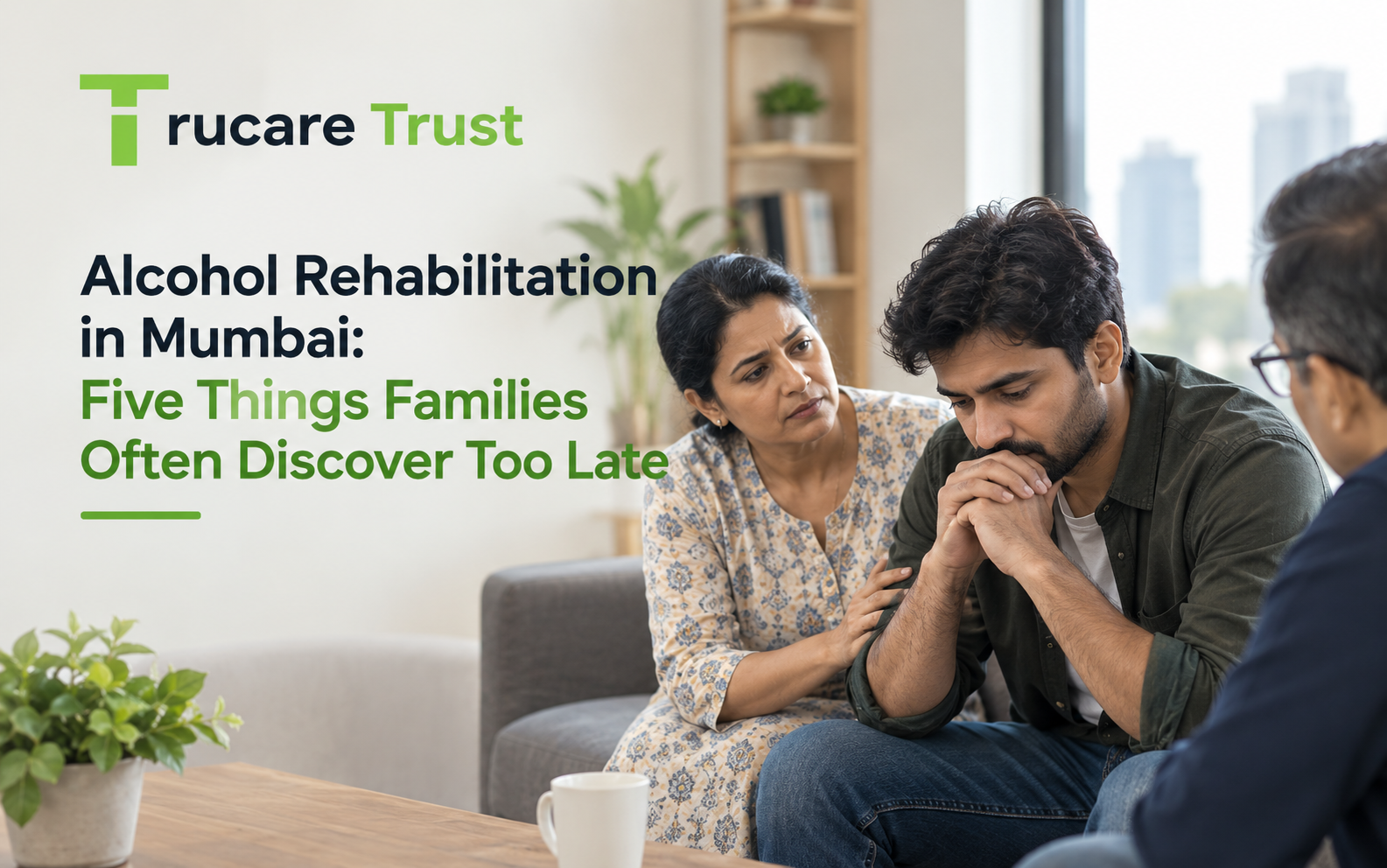
4. The family usually has its own recovery work
One member becomes the rescuer.
Another becomes the police officer.
Someone checks every bank transaction.
Somebody else tries to keep peace by pretending not to notice.
These roles may have developed over years.
When the person enters an alcohol rehabilitation centre Mumbai, the household gets temporary relief from the daily disruption.
That relief can create a false expectation that everything will be normal once the person comes home.
It usually takes more work.
Trust has to be rebuilt through behaviour.
Financial arrangements may need to change.
Relatives may need to stop protecting the person from every consequence while still supporting treatment.
There is no contradiction there.
5. A wedding can expose more than six weeks in rehab
Residential treatment removes many ordinary drinking opportunities.
Then life resumes.
There are weddings, business dinners, holidays, airport lounges, old friends and evenings when nobody else is home.
That is when a relapse-prevention plan stops being theoretical.
A person who knows that large social functions are high risk may decide not to attend initially.
Another may attend but leave early.
Someone else may have one particular friendship where nearly every meeting has historically involved drinking.
Treatment needs to help the person recognise these patterns before encountering them again.
WHO estimates alcohol contributed to 2.6 million deaths globally in 2019. The burden includes disease, injury and other health consequences.
That statistic is important at population level.
Inside a family, the warning signs are usually more ordinary.
The person becomes less reliable.
Arguments happen more often.
Weekends disappear.
Health appointments are missed.
Money is harder to account for.
The strongest reason to seek treatment is rarely a number from a report.
It is the growing evidence that alcohol is deciding more and more of the person’s life.
Rehabilitation cannot make alcohol disappear from the outside world.
It can help somebody build a different response when alcohol reappears in theirs.