You might be standing at a crossroads right now. You know you need a dental implant, or you are at least seriously thinking about it, but the moment you hear “titanium vs. zirconia” your brain starts to spin. You just want something that feels like a real tooth, looks natural, and does not cause problems later, yet every website seems to say something different. An experienced implant dentist Queens can help you sort through these options and choose what’s best for your specific situation.
Maybe you have heard stories about metal allergies. Maybe you worry about how the implant will look when you smile. Or you are scared of choosing “wrong” and being stuck with regret. That is a heavy feeling to carry into a dental chair.
The good news is that both titanium and zirconia implants can work very well when they are chosen and placed thoughtfully. The real question is not “Which material is better for everyone” but “Which material makes the most sense for you, your mouth, and your health.” You will see how titanium has the longest track record, zirconia has some clear advantages for certain people, and how you and your implant dentist can sort through the tradeoffs in a calm, informed way.
So where does that leave you right now. It leaves you needing clear, honest guidance, without pressure, so you can walk into your appointment knowing what to ask and what to look for.
Why choosing between titanium and zirconia feels so stressful
The first part of the stress is simple. This is not like picking a new toothbrush. An implant is placed into your jaw. It becomes part of you. You do not want to repeat this process if something goes wrong.
Then there is the emotional side. Losing a tooth is not just “dental work.” It affects how you eat, how you speak, and how you see yourself in the mirror. When you add a decision about materials on top of that, it can feel like one more thing to get wrong.
On top of that, you may read that titanium is the “gold standard,” then see photos of beautiful white zirconia implants and wonder if titanium is old fashioned. You might read about rare metal sensitivities and suddenly worry that you have one. Because of this tension, you might start thinking that every choice has a hidden risk.
So what are you actually choosing between when you compare dental implant materials. At the simplest level, you are weighing three things. How your body accepts the implant. How it looks and feels in your mouth. How likely it is to last many years without trouble.
How titanium implants work and when they make sense
Titanium implants have been used for decades. They fuse with bone in a process called osseointegration, which is just a technical way of saying your bone grows tightly around the implant so it becomes stable. Most modern implant systems are based on titanium for a reason. There is a huge amount of data on how they behave over time.
In reports reviewed by the U.S. Food and Drug Administration, titanium dental implants are described as a well established option with high success rates when properly planned and placed. If you want to see how regulators look at these devices, you can review an FDA overview of dental implants and safety.
For many people, titanium offers several strengths. It is strong, so it can handle chewing forces, especially in the back of the mouth. It is flexible enough to absorb some stress instead of snapping. It has a long history of predictable healing in both healthy and medically complex patients.
The main concerns you might hear about titanium are usually about metal allergies, metal showing through the gums, or long term inflammation. True titanium allergy appears to be quite rare, but it is real for some people. In thin or receding gums, the dark color of underlying metal parts can sometimes show through, especially in the front of the mouth.
If your priority is proven longevity and you do not have strong concerns about metal, titanium is often the starting point for an implant discussion.
How zirconia implants differ and who might benefit
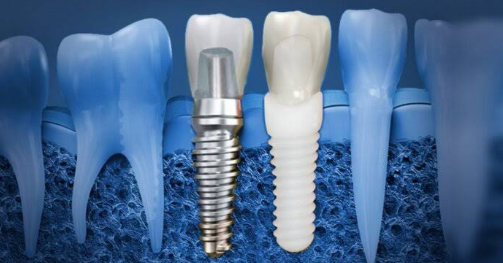
Zirconia implants are made from zirconium dioxide, a strong ceramic material. They are metal free, which is a major reason some people seek them out. They are also tooth colored, so in some cases they can look more natural near the gumline.
Compared with titanium, zirconia has a shorter track record, yet early and mid term studies have been encouraging. Some research suggests good bone integration and healthy gum response when zirconia is used correctly. For example, a thesis from Boston University examined zirconia implants and reported acceptable survival rates and soft tissue health in the short to medium term. You can explore that research in more depth in this Boston University study on zirconia implants.
Where might zirconia make sense. If you strongly prefer a metal free option. If your gums are thin in the front of your mouth and you are very focused on a natural look. Or if your dentist has specific reasons to think your soft tissues will respond better to a ceramic surface.
The tradeoffs. Zirconia is very hard but less forgiving under certain stress. Some systems are one piece, which limits flexibility in positioning. There is less long term data compared with titanium, especially over several decades.
So the question becomes. Is your priority maximum long term data, or is your priority a metal free, tooth colored option with growing but still more limited research behind it.
Side by side: what to consider with titanium vs zirconia implants
It can help to see the comparison in one place. Remember, this is a guide, not a rigid rule. Your mouth, bone quality, bite, and health history all matter.
| Consideration | Titanium Implants | Zirconia Implants |
|---|---|---|
| Track record | Used for decades with extensive long term data | Shorter history, growing but more limited long term data |
| Material | Metal alloy based on titanium | Ceramic (zirconium dioxide), metal free |
| Appearance at gumline | Gray color may show through thin or receding gums | Tooth colored, often better in thin gum areas |
| Allergy / sensitivity concerns | True allergy is rare but possible, some people prefer to avoid metal | Good option for patients seeking non metal restorations |
| Design flexibility | Many systems and components, often easier to adjust angulation | Fewer system options, one piece designs can limit angle adjustments |
| Strength under chewing forces | Strong and slightly flexible, often preferred in high stress areas | Very hard but more brittle under certain types of stress |
| Gum and bone response | Well documented osseointegration and soft tissue response | Encouraging early data on bone bonding and gum health |
| Cost | Often the standard baseline cost | May be higher due to material and system availability |
When you look at this side by side, you can see there is no single “winner.” There is only what fits your situation. That is why a thoughtful conversation with an implant dentist who is familiar with both materials is so important.
Three practical steps to choose the right implant material for you
1. Get a clear picture of your mouth and your health
Ask for a thorough evaluation before talking about materials. That usually means a 3D scan or detailed imaging, a careful gum exam, and a review of your medical history. Bone quality, gum thickness, your bite, and any history of autoimmune issues or allergies will all influence whether titanium, zirconia, or a combination approach makes the most sense.
Questions you can ask. How is my bone quality where the implant would go. Are my gums thin or thick in that area. Does my medical history make one material a better starting point.
2. Be honest about your priorities and fears
This decision is not only technical. It is personal. If the idea of any metal in your body makes you anxious, say so. If your biggest fear is the implant failing years down the road, say that too. Your dentist cannot read your mind, and your priorities should guide the choice just as much as the X rays.
You might say. I am very concerned about how this will look when I smile. Or. I want the material with the most long term data, even if it is not the newest option. This helps your dentist weigh titanium vs zirconia in a way that respects what matters most to you.
3. Ask for a plain language comparison and a plan B
Before you agree to anything, ask your dentist to explain, in simple terms, why they recommend one material over the other for you. Ask them what they would choose for a family member in your situation. Then ask about a backup plan. For example, if they recommend titanium, what signs would make them consider zirconia instead, or vice versa.
You can also ask. If something goes wrong, how would it be managed with this material. Hearing that there is a thoughtful plan B often reduces the fear of making a “wrong” choice.
See also: 3 Ways CPAs Optimize Cash Flow For Businesses
Bringing it all together so you can move forward with confidence
Standing at the edge of implant treatment, it is normal to feel a mix of hope and worry. You want your smile back. You want to chew comfortably again. At the same time, the choice between titanium and zirconia can feel like one more layer of pressure you did not ask for.
The truth is that both titanium and zirconia can be part of safe, successful dental implants when they are matched to the right person and the right situation. Titanium offers a long, well documented history. Zirconia offers a metal free, tooth colored option with promising data and some specific advantages, especially in certain cosmetic situations.
You do not have to become a materials expert. What you can do is bring your questions, your health history, and your honest priorities to an experienced implant dentist and ask for a clear, respectful explanation of your options. From there, the decision becomes a shared one, not a lonely guess.
You deserve to feel heard, informed, and supported as you choose how to restore your tooth. Taking the time now to understand your choices can give you years of comfort and confidence when you smile, speak, and eat.