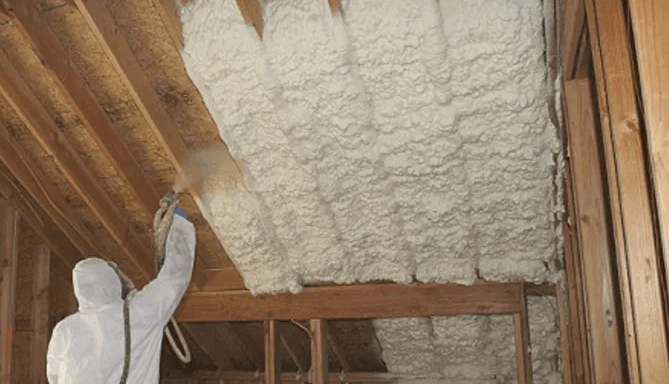
When it comes to insulating your home or commercial property, spray foam insulation has become a popular choice for its superior energy efficiency, air sealing properties, and long-term performance. However, not all spray foam is created equal. Understanding the difference between open-cell and closed-cell spray foam insulation can help you make an informed decision that meets your insulation needs.
Foam Insulation Solution provides expert spray foam insulation services, ensuring your property stays energy-efficient, comfortable, and safe. Here’s a detailed guide on the two main types of spray foam insulation.
What Is Spray Foam Insulation?
Spray foam insulation is a chemical product that expands upon application, filling gaps, cracks, and cavities to create a continuous insulation layer. It is widely used in walls, attics, crawl spaces, basements, and commercial buildings.
Benefits of spray foam insulation include:
- Superior air sealing and energy efficiency
- Moisture resistance
- Soundproofing capabilities
- Long-lasting durability
Choosing the right type of spray foam depends on your specific needs, climate, and budget.
Open-Cell Spray Foam Insulation
Open-cell spray foam is lighter and less dense than closed-cell foam. Its cellular structure is soft and spongy, allowing it to expand significantly after application.
Characteristics of Open-Cell Spray Foam:
- Density: 0.4–0.5 pounds per cubic foot
- R-Value: Approximately 3.5 per inch
- Soft and flexible texture
- Excellent for soundproofing and filling large cavities
Advantages:
- Cost-effective compared to closed-cell foam
- Expands to fill irregular spaces and gaps
- Provides good thermal insulation for interior walls and ceilings
Limitations:
- Lower R-value than closed-cell foam, so more thickness may be required
- Not ideal for areas with high moisture exposure unless paired with vapor barriers
- Less structural strength
Open-cell spray foam is best suited for interior walls, attics, and areas where sound dampening is desired.
Closed-Cell Spray Foam Insulation
Closed-cell spray foam is denser and more rigid than open-cell foam. Its cells are tightly packed and filled with gas, which enhances its insulating properties.
Characteristics of Closed-Cell Spray Foam:
- Density: 1.7–2.0 pounds per cubic foot
- R-Value: Approximately 6–7 per inch
- Rigid and strong
- Acts as both insulation and a vapor barrier
Advantages:
- Higher R-value per inch, providing superior thermal performance
- Adds structural strength to walls and roofs
- Excellent moisture resistance, suitable for basements, crawl spaces, and exterior walls
- Reduces air infiltration effectively
Limitations:
- Higher cost compared to open-cell foam
- Less soundproofing capability due to rigidity
- Requires professional installation for optimal performance
Closed-cell spray foam is ideal for exterior walls, basements, roofs, and areas exposed to moisture or extreme temperatures.
See also: How Personal Injury Lawyers in Aurora Can Help You Recover Maximum Damages
Key Differences Between Open-Cell and Closed-Cell Spray Foam
| Feature | Open-Cell Spray Foam | Closed-Cell Spray Foam |
| Density | Low (soft and spongy) | High (rigid and strong) |
| R-Value per Inch | 3.5 | 6–7 |
| Moisture Resistance | Moderate | High |
| Soundproofing | Excellent | Moderate |
| Cost | Lower | Higher |
| Expansion | Expands significantly | Expands minimally |
Selecting the right type depends on your project requirements, budget, and the area you want to insulate.
Why Professional Installation Matters
Professional installation ensures proper coverage, prevents gaps, and maximizes the insulation’s effectiveness. Improper installation can lead to:
- Air leaks and reduced energy efficiency
- Moisture intrusion and mold growth
- Uneven insulation and gaps
Foam Insulation Solution provides expert spray foam insulation installation, ensuring your property is insulated correctly for maximum performance and durability.
Conclusion
Optimize Your Property with Foam Insulation Solution
Choosing between open-cell and closed-cell spray foam insulation depends on your needs, budget, and the area to be insulated. Both types offer excellent thermal performance and energy savings when installed correctly.
Foam Insulation Solution delivers professional spray foam insulation services, helping homeowners and businesses across New Jersey achieve energy efficiency, comfort, and long-term savings. Trust our experts to provide precise installation, quality materials, and a solution tailored to your property.