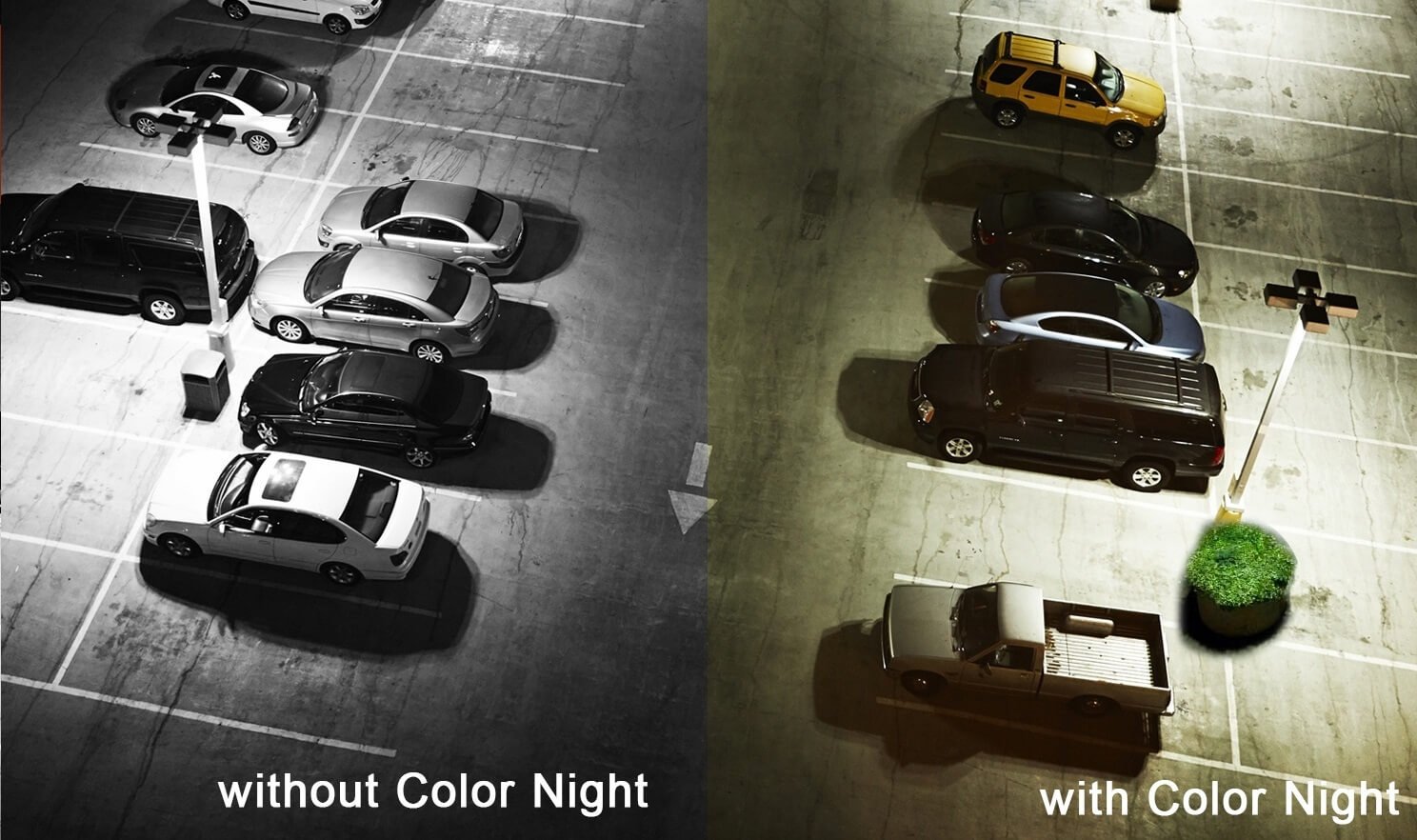
Anyone who has reviewed security footage after an overnight incident knows the frustration. The camera caught the person, but the image is a flat gray silhouette. You can tell someone was there, but not what they were wearing, what color their car was, or anything that would help police or insurers. That limitation is exactly what full-color night vision cameras were designed to solve.
How Traditional Night Vision Works
Most security cameras switch into infrared (IR) mode when light levels drop. Built-in IR LEDs flood the scene with light invisible to the human eye, and the camera removes its IR-cut filter so the sensor can see it. The result is a clear but monochrome image, because infrared light carries no color information.
IR night vision is effective and inexpensive, and it remains a good choice for some situations. But black-and-white footage loses details that often matter most in an investigation.
How Full-Color Cameras See in the Dark
Full-color cameras take a different approach. Instead of switching to infrared, they try to gather enough visible light to keep producing color. Manufacturers use a combination of techniques:
- Larger image sensors that capture more light per pixel
- Wide-aperture lenses, often around F1.0 to F1.6, that let more light reach the sensor
- Image processing tuned to reduce noise in low light
- Soft warm-white supplementary LEDs that switch on when ambient light is too low
With even modest ambient light from streetlights, signage or porch lights, many of these cameras can produce usable color footage without turning on their own lights at all.
Why Color Matters
Color adds information investigators can actually use. It can distinguish a red truck from a blue one, a yellow hoodie from a white one, or reveal the color of a logo on a delivery uniform. Witnesses tend to describe people and vehicles by color, so color footage is easier to match with those descriptions. It also tends to be more persuasive when reviewed by insurers or in court, simply because it is closer to what a person would have seen.
The Deterrent Effect
Cameras with white-light illumination have a side benefit: visible light draws attention. Some models can be set to switch on their lights, and sometimes an audible warning, when they detect a person in a defined zone. For properties such as car lots, construction sites and back entrances, this active deterrence can discourage intruders before anything happens.
Where Full-Color Cameras Work Best
Today’s full color security cameras are especially effective at building entrances, parking areas, driveways and storefronts where there is some ambient light. They are also well suited to retail and hospitality properties, where color footage makes it easier to identify people involved in theft or disputes.
Trade-Offs to Consider
Full-color cameras are not the right choice everywhere:
- In total darkness, such as rural fields or unlit fence lines, they rely entirely on their own white lights, which have shorter range than typical IR.
- Visible white light can bother neighbors, attract insects or be inappropriate where cameras face bedroom windows.
- Where discretion matters, IR cameras are less noticeable at night.
Many modern cameras offer a “smart dual light” mode that stays in IR by default and switches to white light only when a person or vehicle is detected. This gives you color footage of the events that matter without lighting up the scene all night.
See also: Best Business Setup Company in Dubai: How to Choose the Right Business Partner
Tips for Getting the Best Night Image
- Avoid pointing cameras directly at bright lights, which can wash out the image.
- Add or keep modest area lighting where possible; a little ambient light goes a long way.
- Clean lenses and domes regularly, since dust and spider webs scatter light at night.
- Test each camera after dark during installation, not just in daylight.
The Takeaway
Black-and-white night footage tells you that something happened. Color footage helps tell you who and what was involved. For most business and residential entrances, full-color night vision has moved from a premium upgrade to a sensible default.