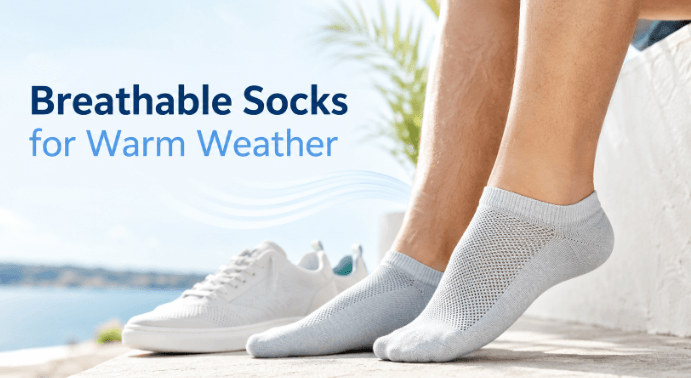
Breathability matters when socks are worn for long hours, warm weather, travel, work, or active daily use. A sock that traps heat and moisture can feel uncomfortable even if the design looks good.
For custom sock orders, buyers should consider airflow, material blend, thickness, and sock height before approving a design.
Why Breathability Matters
Feet produce moisture during normal movement. If the sock cannot manage moisture well, the wearer may feel hot, damp, or uncomfortable. This can reduce how often people wear the socks.
Breathability is especially important for warm climates, gym use, travel, hospitality staff, event crews, and customers who stand or walk for long periods.
Material Blend Affects Airflow
Cotton can feel soft, but it may hold moisture longer than some synthetic blends. Polyester and nylon can improve drying and durability. Spandex helps the sock stay fitted but is usually used in smaller percentages.
A breathable custom sock may use a balanced blend instead of one material only. The goal is to keep the sock comfortable while maintaining shape and color.
Buyers looking at custom socks should ask whether the material is more suitable for daily wear, sports use, warm weather, or winter comfort.
Thickness Can Help or Hurt
A lightweight sock may feel cooler, but it may also provide less cushioning. A thick sock may feel more supportive, but it can trap more heat.
For warm-weather use, lightweight or midweight socks are usually safer than heavily cushioned designs. If cushioning is needed, targeted cushioning on the sole may be better than making the whole sock thick.
Sock Height Changes Heat and Coverage
No-show socks offer the least coverage and can feel cooler with low-cut shoes. Ankle socks provide light coverage and are useful for casual or active wear. Crew socks offer more design space but may feel warmer. Knee-high socks provide the most coverage and are usually less suitable for hot weather unless needed for a specific uniform or sport.
For buyers planning breathable socks alongside other custom accessories, working with Fastsewing can help keep material choices, colors, and logo direction more consistent.
Common Buying Mistakes
One mistake is choosing thick socks for perceived quality without considering heat.
Another mistake is using a high cotton blend for active use without enough moisture-control support.
A third mistake is choosing a tall sock for warm-weather events when ankle socks may be more comfortable.
See also: How to Develop a Strong Business Identity
Practical Checklist
Before ordering breathable socks, check:
- Will the socks be worn in warm weather?
- Do users stand or walk for long periods?
- Is the sock too thick for the shoe type?
- Does the material dry reasonably well?
- Is the sock height appropriate for the climate?
Conclusion
Breathable socks should be designed around comfort, not just appearance. Material blend, thickness, and height all affect how the sock feels after hours of wear.
For warm weather or long-use situations, the best sock is usually lightweight or midweight, breathable, and matched to the wearer’s shoes and activity.