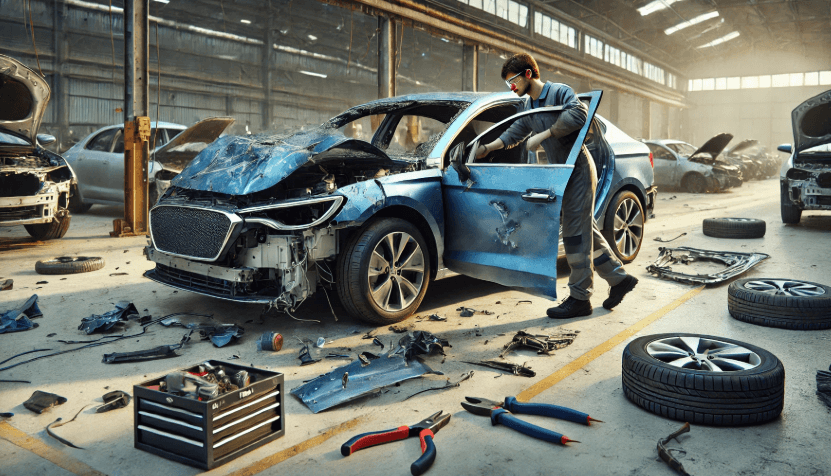
Vehicle decisions become harder when the car has a serious fault. Owners have to think beyond the emotional value of the car and compare repair cost, resale value and the practical cost of keeping it.
The most useful comparison is not the original price of the car, but its value after repair compared with the cost required to get it there. If the repair bill is close to the likely value after repair, fixing the car may only delay a financial loss. That is why owners need to step back and look at the numbers without sentiment.
Documentation matters because it gives buyers confidence. Mileage, inspection reports, service history, workshop estimates and photos of visible issues all help turn a vague problem into a clear valuation question. Without those details, buyers often price the risk higher because they have to assume there may be additional hidden problems.
A private sale can work for some faulty cars, but it often takes longer because buyers are cautious. They may worry about hidden problems, transport costs or future repairs, which makes the process slower than a normal used-car listing. The seller may also spend time answering the same questions repeatedly without receiving a serious offer.
See also: The Innovation Lifecycle in Technology
Honesty is not a weakness in this type of sale. A buyer who is interested in damaged vehicles expects problems; what they need is enough information to price the risk properly. Clear disclosure protects the seller as well because it reduces disputes after the vehicle has been collected or transferred.
The same financial thinking appears on a vehicle sale guide for problem cars, where the focus is on deciding what a problem vehicle may still be worth before another repair bill is accepted.
The decision should be practical, not emotional. A car can have served its owner well for years and still no longer be the right vehicle to repair. Past reliability does not guarantee that a new major fault is worth fixing, especially when the car is older or already close to its market limit.
Engine and gearbox faults are especially difficult because the diagnosis may be only the beginning. Once a major repair starts, other worn parts can appear and push the final cost above the first estimate. A realistic decision should include the possibility that the first workshop price is not the final cost.
A failed inspection does not automatically make a car worthless, but it changes the buyer pool. Some buyers will only consider cars that can return to the road without excessive work. Others may be interested in parts, export or repair potential. The right selling route depends on which type of value remains in the vehicle.
Photos should include more than a clean exterior shot. Dashboard warnings, tire condition, rust, interior wear and visible damage all help buyers understand the vehicle honestly. A complete photo set can make the difference between a vague inquiry and a serious valuation because it reduces uncertainty.
Owners sometimes keep repairing a car because they remember what they already spent on it. That money is gone, and the next decision should be based on current value, not past costs. Continuing to spend because of earlier repairs can turn a small loss into a much larger one.
Transport is another practical issue. If the car cannot legally or safely drive, collection needs to be part of the plan before a sale can be completed. The cost of transport should be considered when comparing repair, private sale and specialist sale options.
It is also important to compare time as well as money. Waiting weeks for private buyers can be frustrating when the car is parked, uninsured or taking up needed space. A slightly lower but certain offer can sometimes be better than a higher price that never becomes a completed sale.
A realistic offer may be lower than the owner hoped, but a clear and completed sale can still be better than another repair bill with uncertain results. The best outcome is not always the highest theoretical price; it is the result that solves the problem with the least additional risk.
Condition affects trust. A buyer may accept a serious fault, but they still need confidence that the seller is describing the problem accurately. Simple details like whether the car starts, whether it can be driven, and when the fault appeared can help create that trust.
The repair-or-sell decision should include future risk. Even if the current issue can be fixed, the car may still be old, high-mileage or close to another expensive repair. Owners should ask whether the repair returns the car to dependable use or simply keeps it running for a little longer.
A damaged vehicle can still have value because markets are not all the same. Some buyers want parts, some can repair at lower cost, and others understand export demand. The owner does not need to solve all of that; they need to present the car clearly enough for the right buyer to price it.
The strongest decision is the one that removes uncertainty. Sometimes that means repairing the vehicle. Other times it means selling it before the problem becomes more expensive. The owner’s goal should be a clear outcome, not another round of costs with no guarantee.